
Reorientation, or How to Come Home
by Joshua Shapero
You’re sitting in a small apartment suspended in mid-air, surrounded by others sitting in their small apartments, suspended in mid-air, hovering like electrified hairs over the city’s massive body of concrete, steel, and glass; you’re riding a bus over its skin, teeming with other commuters like bacteria on their ways to their sites of symbiosis; you’re coursing through a vein under the earth’s skin in a metro car carrying workers like red and white blood cells to fulfill one or another function in the body of the city. I’ve been there too. I’ve wondered: if we’re all related, why does it feel like each one is on their own? When did this metaphor of corporeal relatedness break down?
One morning in the middle of July, my partner and I woke before sunrise and spent the morning digging holes and planting native desert shrubs and trees. Despite the cool morning air, I quickly broke a sweat as I struggled to break up the rock-hard soil of the high New Mexican desert. It had long been drained of what nutrients it had previously harbored by the decades of invasive grasses we had finally managed to eradicate from the ninety square meters of now-bare earth in front of our home. Or, I should say, in front of the building which we legally agreed to owe to a bank until we’ve paid for it in full. After that we could legally claim to be the sole “owners.” But even then, the earth into which the house’s foundation is sunk can’t truly belong to anyone, and least of all to banks who feign the right to sell such places as if they were their property. We all—banks and mortgage-holders alike—turn our backs on the truth at the end of the long chain of such transactions that stretches into the past: human ownership of land is a fiction, regardless of how many rhizome-spreading grasses are sown into the sandy soil, how much water is needlessly spilled to make it grow, and how much gasoline is consumed by motors to spin blades to keep it neat and short. Indeed, that strange kind of “care” does little more than iconize what Joe Truett claimed is a genetically inherited (but certainly also historically and economically conditioned) preference for wide expanses of emerald grass recently clipped by populous herds of healthy ruminants. Instead, the truth I came to appreciate through working with people in the central Peruvian highlands town of Huaripampa, and through all the subsequent research and reading and analytic pondering, is that even if we pretend to be its “owners,” our relationships with the earth—or, more precisely, the individual places and climates where we live and work—are familial relationships, intimate bonds of mutual care, work, and enjoyment. What happens, then, when we ignore these relationships? And what must be done to restore them, to be welcomed home once again?
But in that moment, as shock after shock of the hard earth reverberated up the shovel’s shaft and into the bones of my body, I hadn’t gotten quite that far in my thinking. Instead, I was recalling a faena, or communal work party, that I had witnessed and recorded in Huaripampa. In early April, 2013, heavy rains had carried debris into drainage canals that had not been cleaned as frequently as they should, leading to flooding that entered several families’ houses, and to a lluqlla, or landslide, that demolished a house further down the mountain in the district capital, Olleros. During the faena, roughly twenty adult men stood in groups of five along the length of the canal, counting to three before four of them struck their heavy barrettes simultaneously into the earth while the fifth lifted out the long clods with a pickaxe, gradually opening the long canal’s width by a few inches (Fig. 1). Working together in large groups, I thought, has a very different feeling from working as a single household. For example, during the faena, there was music from a radio in the background (ten years earlier it would have been a drum and a pair of roncadora flutes playing a hypnotic tune of raspy harmonics and syncopated rhythms), there were occasional breaks to sit in the shade and drink from a plastic bottle of liquor or soda, and at midday a hearty meal brought in large pots by the men’s wives. It really did feel like a party; not one that was just about revelry and pleasure, but one that combined the corporeal experiences of effort and pleasure into a whole that was unmistakably marked by the Andean aesthetic of dual complementarity. Indeed, this aspect of the faena was not much different from most agricultural work in Huaripampa, in which members of multiple families often work together, sharing food, drink, music, and jokes as they labor turning the earth, sowing seeds, or extracting the fruits.

Fig. 1. Canal-cleaning faena in Huaripampa, April 10th 2013. Photograph by Author.
My mind then turned from this memory toward the high grasslands of the hallqa. Here was a different kind of work. Images of shepherds, solitary silhouettes plodding along behind their flock or herd against the brilliant background of glacial mountains and blue sky (Fig. 2), or climbing up from a gurgling stream with a bucket of water, or approaching their shelter bent under the bundle of firewood on their back. Their work seemed far lonelier—indeed the image of the herder in the Andes and in Europe as well has often been associated with loneliness and nostalgia for familiar places and people. And yet, what I learned with herders in Ruriq canyon was that, perhaps in response to that loneliness, among other reasons, they came to find solace, company, and even a kind of ecstatic joy in the places themselves. And this intimate relationship with places was one that could yield just as strong a sense of belonging, nostalgia, and yearning (or, to the contrary, exclusion, avoidance, and suffering) as those among family members.
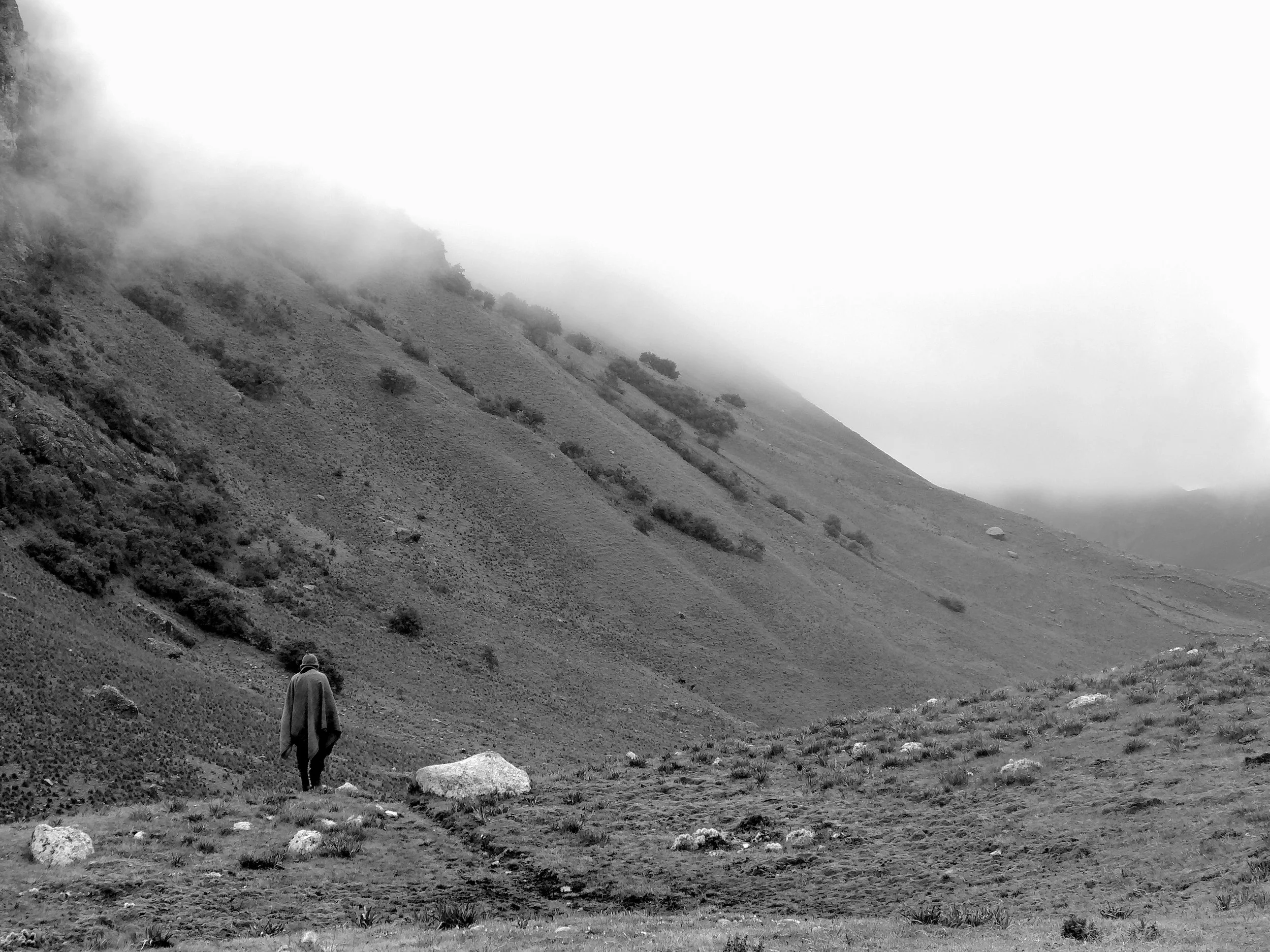
Fig. 2. Herder in Ruriq Canyon. Photograph by Author.
One of the most poignant illustrations of this that I witnessed was upon reaching the shore of Tarawra Lake. There at the headwaters of Ruriq River, facing the great glacier Pamparahu that rose to the sky on the far side of Tarawra, stood an apachita, or stone cairn, more than two meters in height. It was, and still is, by far the highest I’ve ever seen. But the structure’s impressive stature was what moved Tomás, the eldest of the herders on that trip, to press his body against it and wrap his arms around it, tears in his eyes (Fig. 3). Rather, he expressed clearly the nature of his emotions when he spoke softly to the stones, saying that he had missed Tarawra, but not forgotten it, and then, turning to the rest of us, asked rhetorically if this might be the last time he reached this place.
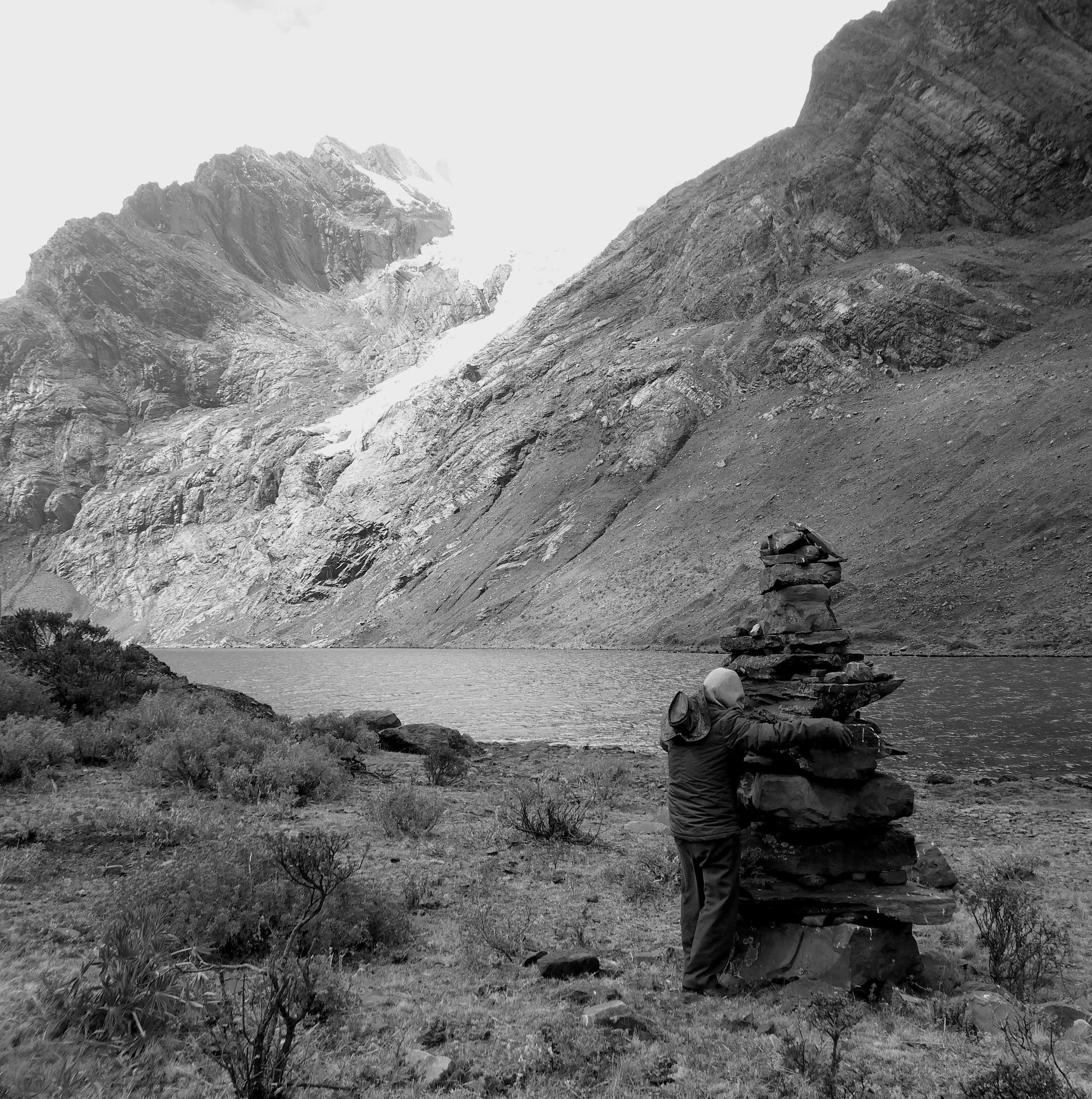
Fig. 3. Tomás at Tarawra. Photograph by Author.
In this scene, what was striking was distinctively not Tomás’s loneliness there in the hallqa, but rather the loneliness he expressed having felt when far from that place, and the nostalgia he projected from that point forward to the end of his life. As we stood there, it began to rain. The rain quickly turned to snow, and we sat, partly protected by an exuberant patch of putaqa (a tall, purple flower in the genus lupinus), and passed around coca leaves and a bottle of bright-green alcohol macerated with a blend of hallqa herbs I never managed to understand (Fig. 4). I happened to have a wooden quena flute with me, and it seemed like the right time to play it. As I tried my best to catch the rhythm of a huayno from Huamalies, on the other side of the Cordillera Blanca in Huanuco, Tomás and one of his companions stood up and danced, laughing, kicking their legs and whipping their arms with all their strength. Then and there, in the falling snow among the glaciers at Tarawra, about twenty kilometers from Huaripampa, and more than a kilometer above it, the feeling was anything but lonely. The places around us—the lake, the apachita, the Pamparahu glacier, the towering pinnacles of Huantsan Hirka, Llullu Huantsan Hirka, Kashan Hirka, Shaksha Hirka, and Puma Waqanqa—were our company, our family, our companions in effort and play.
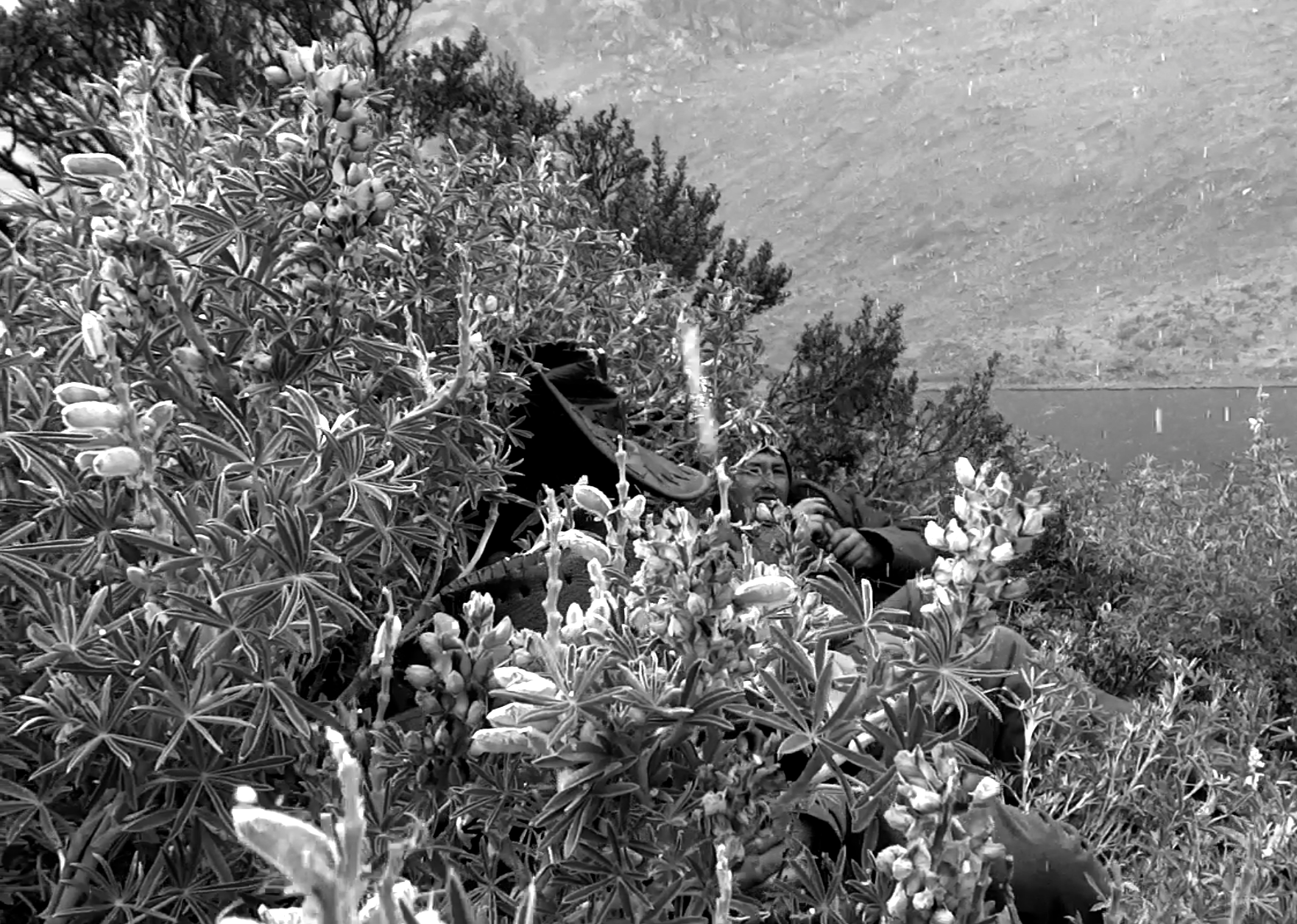
Fig. 4. Sheltering from the snow among the putaqa at Tarawra lake. Photograph by Author.
My mind returns to the shovel in my hands, and to the hard earth that has gradually given way to the knee-deep hole before me. How could I gain such companionship from this place, this ninety square meter patch of dirt between house and road? If I keep working on it, caring for it, playing with and on it, maybe then? I wonder. But something still feels to be missing. That relationship remains a private one—between an individual and the place they believe is their property through legally binding contract and thus theirs to do with what they wish—absolutely distinct from the relationship between friends or among family members. One thing that makes these latter relationships different is their recognizability and, when it comes down to it, their utterability. I can say “my friend” or “my grandmother,” and human figures come to mind. If I point out a colleague or an elderly woman in a photograph when I say these words, they would make sense to anyone who speaks English. But what could it possibly mean to call my front yard my grandmother, or a spot I like to visit in the Sandia Mountains[1] my friend? Nothing much, in English. It might be taken as a joke, or at best as a weak attempt at some kind of pithy commentary. It doesn’t amount to something cultural in the sense of a deeply shared intuition that can be instantly recognized as a kind of quasi-natural phenomena. For this, another kind of common grounding would be necessary, not just in practice but in language. First, the places themselves need names. Second, there need to be names for the kinds of things people do in those places, and knowledge of when, where, and how they are done. Third, there needs to be a socially interconnected group of people who all recognize all those names, use them habitually in conversation. Lastly, and most difficult of all, all of this needs to fit together with other habitual ways of speaking and doing among these people.
I wipe the sweat from my brow. The hole is big enough to plant the tree now, and I am exhausted enough to be thoroughly grateful for this fact. There’s no music or dancing, though, and no friends. Just my partner, also exhausted from the holes she was herself digging, and our shared satisfaction with the completion of the morning’s hard work. Looking up and down the street I see a series of yards, all different, all the same. The only other people are a couple of workers laboring in the yard of the house that’s about to be flipped across the street and a few stray dog-walkers and joggers. No one is enjoying these places, no one is looking at them, no one is dancing or drinking on them, no one is speaking with them. No one is even speaking about them. Who will miss them? Who do they miss? They must be lonely, I think. I take out a cigarette, as I learned to in Ruriq with Fernando and José and Tomás, and speak to it—but really to these places, to the hard earth, to the sky, to the Sandia Mountains, to the Rio Grande, to the Three Sisters and to the sacred, marked, black boulders that skirt them—thanking them, promising my dedication to them, pledging not to forget them even if I must leave some day. I light the cigarette, blow the smoke toward each of these places, and toward the plants we’ve put into the ground, and then place the cigarette under a rock for the place to enjoy the perfume of the tobacco, as I saw many times in the hallqa. It’s a start.
Note
[1] Some older names for these mountains: in Southern Tiwa Posu gai hoo-oo (“place where water slides down”); in Tewa, Oekuu Pʼin (“Turtle Mountain”); in Keres, Tsepe, in Navajo, Dził Nááyisí; in Jemez, Kiutawe.
Joshua Shapero is a linguistic anthropologist with more than fifteen years of experience researching, teaching, and writing about language, culture, cognition, and environmental justice in the Andean region. Joshua teaches Quechua language and culture at Duke University.